


Introduction
One of the most difficult ethical questions in borderline lipoedema care is not how to diagnose lipoedema, but, in some cases, whether diagnosis is appropriate at all.
Increasingly, clinicians are seeing people who are already concerned that their body shape represents a disease, after comparing themselves with images on Instagram or discussions on other social media platforms. In digital spaces where ‘aesthetic norms’ are often unattainable and deliberately edited, ordinary variations in female bodies can begin to appear abnormal. The result is that many people begin asking whether their natural body shape represents pathology.
This creates an immediate tension. When does natural variation become pathology? And at what point does the search for a diagnosis turn an ordinary body shape into disease?
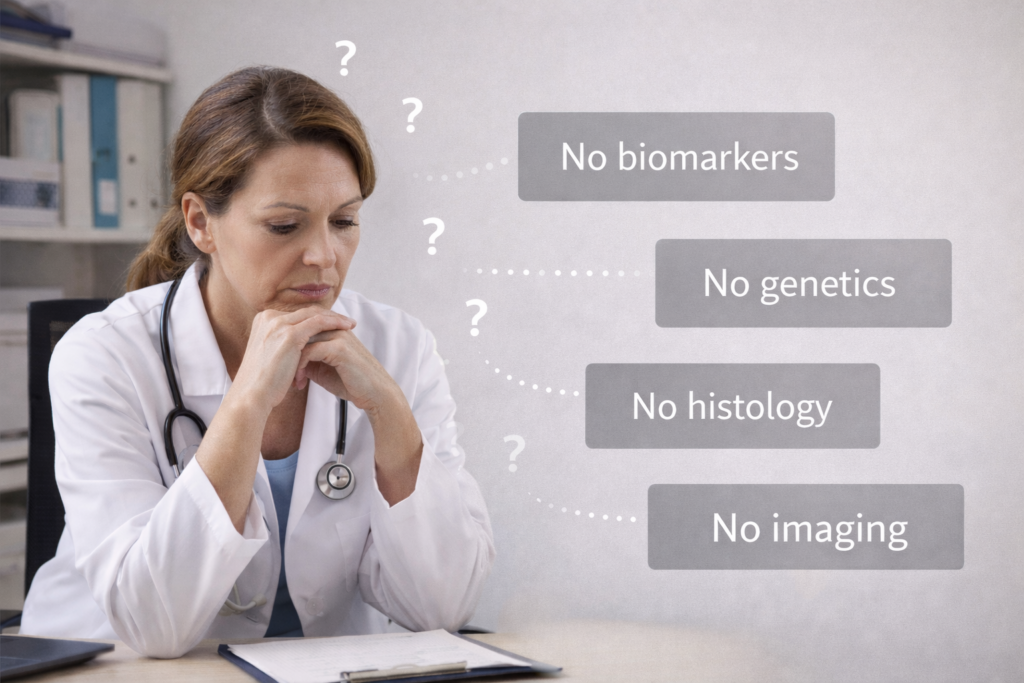
In other areas of medicine, disease is diagnosed by something concrete: a biomarker, a genetic test, a histological finding, reproducible imaging, or a set of clearly defined symptoms. Lipoedema has none of these that are specific, validated and universally accepted. What we are left with instead relies on a clinical history, pattern recognition, anecdotal symptom reporting and a practitioner’s judgement.
That is not inherently wrong, but it does mean the boundaries of the diagnosis depend heavily on clinical interpretation and may vary between clinicians.
Normal Female Fat Distribution Exists on a Spectrum
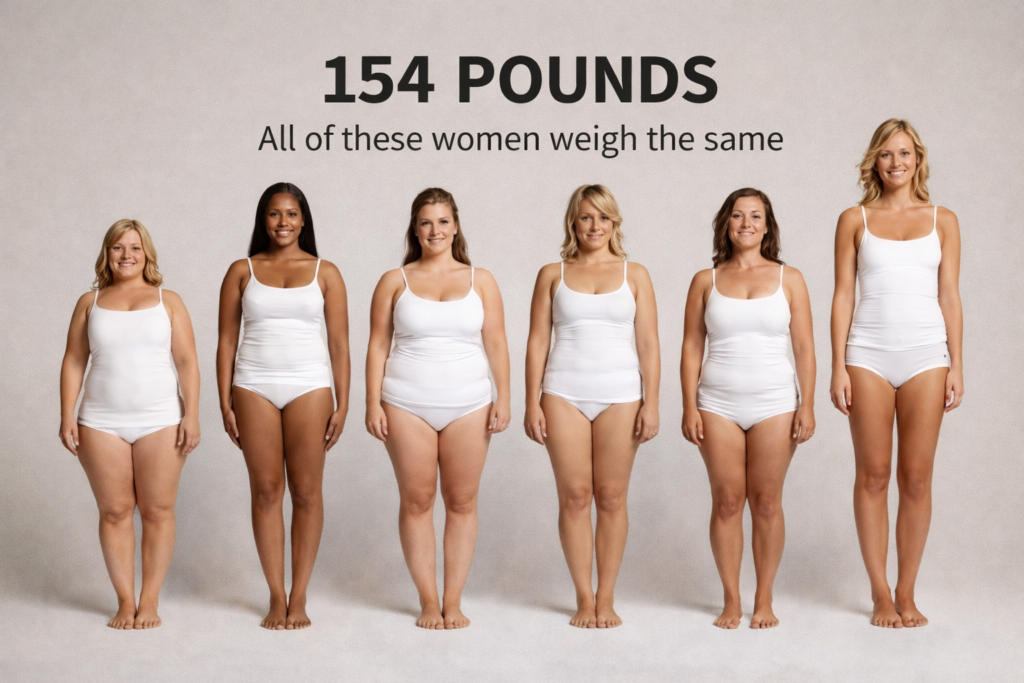
Lower-body fat distribution in women is biologically normal and considerably variable. Hips, thighs and buttocks are hormonally responsive tissues designed to store energy and respond to reproductive life stages. In the general population, there is substantial overlap between what is considered “healthy”, “overweight” and “obese” in appearance, with no clear anatomical boundary between them.
What we often describe as disproportion therefore exists on a continuum. Familial body shape, ethnicity, puberty, pregnancy, menopause and ageing all influence how fat is distributed, even in the same woman over her own lifetime. There is no biological point at which normal gynoid fat suddenly becomes pathological adipose tissue.
Why Disproportion Alone Cannot Define Lipoedema Diagnosis
Because body shape varies so widely, disproportion alone cannot define pathology. Many women have prominent hips and thighs without pain, progression or tissue fragility.
The concept of disproportion is therefore descriptive rather than diagnostic. It tells us something about appearance, but not necessarily about the disease.
This creates a central problem for lipoedema diagnosis. At what point does variation become pathology, and who determines where that boundary lies?
The Problem with Symptom-Based Boundaries
One might assume that symptoms resolve this uncertainty. In practice, they do not.
Tenderness, bruising and heaviness are common experiences in women, particularly during hormonal transitions or times of weight change. Pain is subjective and highly modulated by expectation, stress, context and interpretation. Progression is difficult to define without long-term objective observational studies, which are currently lacking.
The introduction of the word lipalgia into diagnostic frameworks (from the 2020 European consensus document) did not solve the problem-it moved it. The threshold shifted from visible difference to reported experience. Diagnosis therefore becomes increasingly dependent on interpretation rather than measurement.
Why the Absence of Biological Markers Matters
If a reliable genetic test, inflammatory marker, imaging pattern or consistent histological feature clearly separated lipoedema from normal adipose tissue, it would already be in clinical use. The fact that it is not should give us pause.
Adipose tissue is biologically complex: heterogeneous, hormonally active, immunologically active and structurally variable. Attempting to draw a sharp diagnostic boundary within it, without a marker, risks two different errors. One is medicalising normal variation on the one hand and dismissing genuine pathology on the other. Both have consequences.
The Consequences of Uncertain Diagnosis
A diagnostic label carries consequences that extend far beyond the consultation room. When clinicians apply such a diagnosis in the absence of biological markers, they may inadvertently attach a lifelong identity to what may simply represent normal variation. That label can shape how a person interprets their body, their health and their future.
For some women, particularly those who have lived with symptoms or complications for many years, lipoedema diagnosis can bring relief and validation. It can provide a framework that helps make sense of experiences that were previously dismissed or misunderstood. For others, the effect can be very different. Being given a diagnosis of a chronic disease may introduce a sense of permanence and loss of control over their body that they had not previously felt.
For that reason, the question is not simply whether a diagnosis can be made, but whether it will help the person in front of you. Why does she want the diagnosis? What does she hope it will explain, change or allow?
Increasingly, clinicians are encountering individuals who seek a diagnosis not because of functional impairment or persistent symptoms, but because visual comparisons on social media have prompted concern about body shape. Diagnosis can therefore risk becoming a response to comparison rather than to disease.
In such circumstances, clinicians must consider not only whether a diagnostic framework can be applied, but whether doing so will genuinely improve health and wellbeing, or instead reinforce the medicalisation of normal human diversity.
How Experienced Clinicians Approach Lipoedema Diagnosis
In real clinical practice, careful clinicians rarely ask a single binary question: does this person have lipoedema?
Instead, they ask more pragmatic questions:
- Is there meaningful functional impairment?
- Is there tissue fragility or clinically significant pain?
- Is there progression independent of weight change?
- Is the distress proportionate to objective impairment?
- Would a diagnosis change management for the better – or worsen fixation and harm?
This is not indecision. It is clinical restraint.
Many people sit in a grey zone for years. Some never benefit from a diagnostic label. Others deteriorate and require escalation of care. There is no single pathway that applies to everyone.
An Uncertain Diagnosis Requires Restraint
Lipoedema, in its current form, is not a disease in the classical biomedical sense. It is a clinical construct describing a pattern rather than a mechanism, stabilised by consensus rather than biology. That does not make it imaginary but it does mean that caution is required.
When diagnostic boundaries are uncertain, certainty often rushes in to fill the gap; culturally, socially and commercially. Identity forms around labels. Difference becomes pathology. Nuance disappears.
The ethical response to diagnostic uncertainty is not louder confidence, but greater humility.
Living With Uncertainty
Until reliable biological markers exist, the boundary between normal variation, disproportion and pathology will remain contested. That is uncomfortable for clinicians and for women seeking a diagnosis alike. But discomfort is not a justification for premature certainty.
Good care sometimes requires saying:
- I do not know yet.
- This may never progress.
- A label may not help you.
- Management matters more than diagnosis.
That is not dismissal. It is proportion.
Conclusion
This debate is not merely academic. Diagnostic labels shape lives. They influence identity, treatment pathways, surgical decisions and psychological wellbeing.
Over-diagnosis can be as harmful as under-diagnosis, particularly when a condition sometimes sits within normal female variation.
Lipoedema diagnosis therefore requires careful, proportionate clinical reasoning , not fear-driven certainty or social-media absolutism.
Until biology catches up with our definitions, judgement, context and restraint remain our most reliable tools. And sometimes the most responsible thing a clinician can do is sit with uncertainty rather than resolve it too quickly.